
 admin
In the modern business world, effective customer communication plays an important role in building trust, increasing sales, and maintaining long-term relationships. Customers prefer businesses that offer quick responses, personalized assistance, and convenient communication channels. WhatsApp has become an essential platform for connecting with customers, making it a valuable tool for businesses of all sizes.
However, managing hundreds of customer conversations manually can become difficult. Businesses may miss important inquiries, forget follow-ups, or struggle to maintain organized customer records. This is where WhatsApp CRM for business becomes a useful solution.
By combining WhatsApp messaging with Customer Relationship Management (CRM) features, companies can manage customer conversations, track leads, automate repetitive tasks, and improve overall communication. It helps businesses handle customer interactions more professionally while making daily operations easier.
What Is WhatsApp CRM for Business?
WhatsApp CRM for business is a customer management solution that connects WhatsApp Business messaging with CRM software. It allows organizations to manage customer conversations and important business information through a centralized dashboard.
Instead of switching between different applications, employees can communicate with customers, access contact details, review previous interactions, and manage sales opportunities from one platform.
For example, when a potential customer sends a WhatsApp message asking about a product or service, the sales team can record the inquiry, assign it to a representative, and schedule follow-ups directly through the CRM system.
This makes customer management more organized and improves coordination between sales and support teams.
Key Benefits of WhatsApp CRM for Business
1. Centralized Customer Communication
Managing conversations across multiple devices can create confusion and communication gaps.
A WhatsApp CRM brings customer interactions into one centralized platform. Team members can access conversation history, customer information, and previous inquiries whenever needed.
This helps employees understand customer requirements and provide consistent responses without repeatedly asking customers for the same information.
2. Better Lead Management
Lead management is essential for converting potential customers into paying customers.
With WhatsApp CRM integration, businesses can capture inquiries, organize customer information, categorize leads, and assign conversations to appropriate sales representatives.
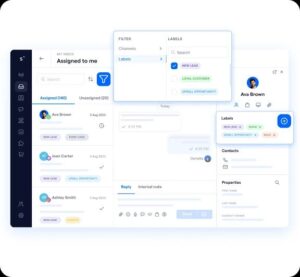
Managers can also track the progress of leads through different sales stages. This reduces the chances of missed inquiries and helps sales teams focus on promising opportunities.
3. Automated Customer Follow-Ups
Following up with every customer manually can consume valuable time. WhatsApp CRM makes communication more efficient through automated workflows.
Businesses can configure messages for appointment reminders, inquiry acknowledgments, order confirmations, and other customer updates.
Automation also helps sales representatives remember important follow-up activities and maintain regular communication with prospects.
Business-initiated WhatsApp messages must follow applicable consent requirements and approved template policies.
4. Faster Customer Support
Customer satisfaction depends heavily on the quality and speed of support.
WhatsApp CRM allows support teams to manage incoming messages through a shared inbox. Features such as conversation assignment, predefined replies, and automated greetings help employees handle inquiries efficiently.
Customers can receive assistance without waiting for a particular employee to become available, improving the overall support experience.
5. Improved Sales Team Productivity
When customer information and communication history are available in one place, sales representatives can work more efficiently.
They can understand customer interests, identify sales opportunities, and provide relevant product recommendations.
Managers can also monitor team activities, review lead progress, and identify areas where additional training or support may be required.
6. Personalized Customer Engagement
Customers are more likely to engage with businesses that understand their needs.
WhatsApp CRM allows companies to organize customer information and use relevant details to personalize communication.
For example, an online shopping business can send relevant product updates to interested customers, while a real estate company can share property information based on customer preferences.
Personalized communication helps businesses create meaningful customer experiences. Marketing messages should only be sent in accordance with applicable consent and messaging policies.
Essential Features to Look for in WhatsApp CRM Software
Choosing the right CRM platform is important for achieving better business results. Before selecting a solution, consider the following features:
-
- WhatsApp Business Platform integration.
-
- Centralized customer conversation management.
-
- Automated messaging and chatbot functionality.
-
- Lead capture and lead assignment.
-
- Customer contact management.
-
- Sales pipeline tracking.
-
- Automated follow-up reminders.
-
- Customer interaction history.
-
- Performance reports and analytics.
-
- Data security and access management.
These features help businesses manage customer relationships and communication more effectively.
Which Businesses Can Benefit from WhatsApp CRM?
WhatsApp CRM is useful across various industries because it supports direct and convenient customer communication.
-
- E-commerce businesses: Manage product inquiries, order updates, and delivery notifications.
-
- Real estate companies: Handle property inquiries, schedule site visits, and manage potential buyers.
-
- Educational institutions: Respond to admission inquiries and share course information.
-
- Healthcare organizations: Send appointment reminders and manage service-related communication while protecting patient privacy.
-
- Travel agencies: Share booking confirmations, travel updates, and customer assistance.
-
- Retail businesses: Communicate promotional updates and provide product-related support.
Regardless of business size, an organized WhatsApp CRM system can improve communication and simplify customer management.
Tips for Choosing the Right WhatsApp CRM for Your Business
Before investing in a WhatsApp CRM solution, identify your company’s communication and customer management requirements.
Look for a platform that offers an easy-to-use interface, reliable integration, customizable automation, and flexible reporting options. Make sure it supports the official WhatsApp Business Platform if you require API-based communication and multiple-user management.
You should also compare pricing, scalability, customer support, and data protection capabilities. A suitable CRM should support your current operations while allowing your business to grow.
Conclusion
Adopting WhatsApp CRM for business can make customer communication more organized, efficient, and productive. From managing leads and automating follow-ups to improving customer support and tracking sales activities, this solution offers several advantages for modern organizations.
By bringing customer conversations and important business information together, companies can build stronger relationships, improve team productivity, and deliver better customer experiences.
As businesses continue moving toward digital communication, investing in the right WhatsApp CRM solution can become an important step toward sustainable business growth.

